
Promotional products are typically given to customers as gifts or freebies, primarily used by businesses to promote their company, corporate image, brand, or events. They are often distributed as exhibits at trade shows, conferences, and sales visits, and frequently included as complimentary items with orders.
While promotional products represent a highly cost-effective marketing approach, they still require businesses to invest time and resources. Therefore, companies must have a clear understanding of their target audience's interests and preferences, selecting items that resonate with them while ensuring these gifts leave a lasting impression over the long term. These factors are critical considerations when businesses design and execute promotional strategies.
What is Buyer Intent?
Buyer intent for promotional products primarily refers to the factors that enterprises, brands, or event organizers consider when procuring promotional gifts. This differs from the end-user's actual experience, focusing instead on procurement objectives, cost control, brand dissemination effectiveness, and suitability for specific activities.
What to Consider When Buying in Bulk?
When businesses engage in bulk procurement of office supplies or promotional items, several key factors warrant special attention to ensure the process is efficient and aligned with company needs:
(1) Unit Price and Budget: Clearly define the cost per item to ensure it fits within the company's procurement budget. (2) Minimum Order Quantity: Understand the supplier's minimum order requirements to avoid excess inventory or undue pressure on storage. (3) Customization Capabilities: Verify if the supplier supports branding elements like LOGO printing, color matching, or personalized designs to enhance the corporate image. (4) Delivery Timeline: Confirm production and shipping cycles to meet deadlines for conferences, events, or trade shows. (5) Sample Support: Obtain samples before bulk production to test quality and effectiveness in advance. (6) Packaging Options: Choose appropriate packaging based on needs, especially for corporate gift sets or event giveaways, balancing aesthetics and practicality.
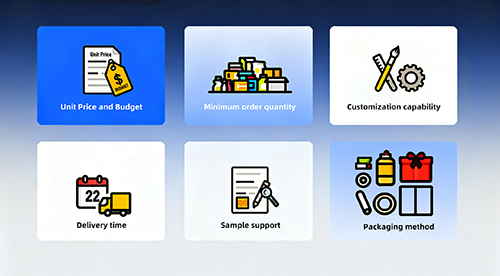
Factors Influencing Purchase Decisions for Promotional Products
(1) Cost-Effectiveness Buyers of promotional products prioritize maximizing brand exposure and marketing impact within limited budgets. They seek the optimal balance between per-unit costs, bulk procurement expenses, and the item's display value, ensuring each gift effectively conveys the brand image and generates long-term influence. According to the latest industry analysis, the promotional products sector achieved record sales of $26.6 billion in 2024, underscoring its value as a high-ROI channel.ASI 2024 Sales Report
(2) Brand Alignment Buyers emphasize how well the item's style, texture, and color align with the company's brand image to accurately convey brand positioning—whether premium, eco-friendly, tech-savvy, or trendy—thereby reinforcing brand recognition.
(3) Customizability Buyers value the customizability of promotional items, aiming to imprint LOGOs, slogans, or patterns to meet event promotion needs. Flexible design options on various product areas, such as the front of apparel, hat panels, or mug sides, can significantly boost brand visibility.
(4) Practicality and Long-Term Use Buyers focus on the practicality of items, hoping recipients will use them frequently to sustain brand exposure. They also consider durability and broad applicability, such as for drinkware, pens, or office supplies, ensuring the gifts continue to promote the brand in daily life or work settings over time.
(5) Ease of Distribution and Management Buyers prioritize manageability, including ease of bulk procurement, transportation, and on-site distribution. Items should be durable, resistant to damage, and simple to store, thereby reducing logistics and management costs for smoother event execution.
(6) Activity and Scenario Fit Buyers stress the adaptability of items to various scenarios, such as trade shows, conferences, employee perks, client gifts, or outdoor events. These should enhance the overall experience through interactivity, fun elements, or lifestyle-oriented designs, fostering deeper connections between the brand and audience.
(7) Trends and Market Perception Buyers track market trends, favoring items that align with eco-friendly, tech-forward, or personalized themes to project a modern brand image. This helps avoid outdated or unpopular products, minimizing waste while upholding brand reputation. For insights into emerging trends, the 2025 industry projections forecast continued growth to $27.8 billion in distributor sales, with a focus on sustainable and innovative options.2025 Promotional Products Trend Report

By leveraging these factors, businesses can employ personalized marketing, targeted sales, and timely promotions to focus on high-intent prospects. Understanding buyer intent enables the development of more effective and efficient sales and marketing strategies.